Dashavatar – 10 divine forms of Lord Vishnu
We are living in an era having a strong influence of the Western culture. Being born as a Hindu and having a soul that belongs to Sanatan Dharma, I personally feel it unseemly of the Hindu families where they don’t have time or any inclination towards introducing their kids to the ideas about what Hinduism has blessed us with.
Vedas and Puranas
We all know that Vedas are the ultimate source of knowledge when one wants to know about Sanatan Dharma and Hinduism. But, Vedas are not that easily intelligible to all. And one more thing you’d also agree that if one wants to learn something, it’s better to initiate from childhood, wouldn’t you?
Hinduism has been very reflective since its origination. On one hand it has Vedas that help rational minds to acquire ultimate knowledge, at the same time it has stories assembled in texts called Puranas that can help common people to understand and get familiar with different deities and their roles in Nature or can say in sustaining life on this planet.
Puranas are believed to be written by Maharshi Ved Vyas. There are 18 main Puranas containing over 4,00,000 verses on various topics such as medicine, astronomy, cosmogony, cosmology, mineralogy, folk tales, grammar, pilgrimages, temples, theology, humour, love stories, and philosophy as well as the genealogies of gods, goddesses, kings, heroes, sages and demigods.
Trimurti – Brahma, Vishnu and Mahesh
Before I begin telling the stories of various avatars, let’s begin with some basic ideas all of us must be knowing.
The cosmic functions of creation, maintenance and destruction are represented as a trinity of deities known as Trimurti. The trio of these supreme divinity of Brahma- the creator, Vishnu- the preserver and Lord Shiva, here called Mahesh- the destroyer symbolises the cyclical nature of our existence from birth, preservation, destruction and the following regeneration.
Now, being the protector, lord Vishnu has to perform these main functions of protecting the righteous, eliminating the evil and finally re-establishing dharma. As most of the religions are meant to give us hope, courage and patience, it becomes necessary to create or give the examples of some heroes or can say the saviours that people do believe in and can look up to in grave needs as well. So, in order to sustain or preserve the universe, and for blessing Brahma’s creation on Earth with happiness and goodness, also for saving them from evil powers, Lord Vishnu descents on Earth in various forms. These are called Avatars!
Not only Vishnu but also Shiv, Brahma, Ganpati, Devi (goddess) have taken various forms as Avatars to sustain or establish the cosmic order. In short, ‘Avataran’ literally means Gods coming to earth whenever dharma is in danger and the wicked or evil forces grow powerful. Supreme deities transform themselves to show the right path of dharma suited to changing times.

There are various types of Avatars (total 6), but here I intend to help anyone understand this so, not going for the detailed descriptions of all of those. Yet, we can say that Lord Vishnu has appeared as Anshavatar (अंशावतार) and Poornavatar (पूर्णावतार).
In Hinduism, it is said that one who possesses all the 64 divine qualities is said to be Bhagwan or Lord. So, as the names suggest an Anshavatar is ‘Ansha’ + ‘Avatar’ has partial manifestation of the attributes of that supreme deity. Here the portion of all the virtues the avatar possesses is also mentioned in Hindu scriptures.
An Anshavatar has 1/4th of the divine virtues than a Bhagwan has i.e. 16 kalas or qualities out of 64. And from this you must have understood that a Poornavatar i.e. ‘Poorna’ + ‘Avatar’ contains all the 64 divine qualities.
As an avatar, Shree Krishna has all the 64 attributes of Lord Vishnu i.e. Vishnu Tattva.

Puranas are written thousands of years ago and also are written over a long period of time so, there’s much complexity while we talk about the number of avatars. Each of the Purana has mention of various avatars of Lord Vishnu, but as per the need of time the avatar in one purana may not be included in the other. So, here we are including those 10 avatars which are mostly common in a couple of puranas.
These 10 (दस) – avatars (अवतार) are cumulatively known as the ‘Dashavatar’.
List of 10 Avatars of Lord Vishnu in Order (Dashavatar)
Varying per region and tradition, different versions of the list of Vishnu’s avatars exist. The Agni Purana, Padma Purana, Garuda Purana, Linga Purana, Narada Purana, Skanda Purana and Varaha Purana mention the common Dashavatar list including the following, in chronological order:
- Matsya (The Fish): The very first of all the 10 primary avatars where Lord Vishnu descends as a horned fish during Satya Yuga to save King Manu, the sages, and the sacred Vedas from the cosmic deluge (Pralaya).
- Kurma (The Tortoise): Kurma in Sanskrit means ‘A tortoise’. The second incarnation of Shree Vishnu as a giant tortoise supported Mount Mandara on his back during the Churning of the Ocean (Samudra Manthan) to retrieve the nectar of immortality (Amrita).
- Varaha (The Boar): Varaha stands for ‘A boar’ in Sanskrit. The third avatar where Shree Hari Vishnu saved the Earth (Bhudevi) from drowning in the cosmic ocean by lifting her on his tusks after defeating the demon Hiranyaksha.
- Narasimha (The Half-Man, Half-Lion): One of the most fierce avatars of Bhagvan Vishnu. As the name suggests where Nar (नर) stands for a man and Simha (सिंह) stands for a lion, here by taking the form of a half man – half lion, God vanquished the demon king Hiranyakashipu and protected his devout child devotee Prahlad.
- Vamana (The Dwarf Brahmin): Shree Hari Vishnu appeared as a young dwarf Brahmin sage, representing the transition into human form. With three divine paces, he measured the earth, sky, and underworld, checking the pride of King Mahabali while restoring the balance of power.
- Parashurama (The Warrior Sage with an Axe): Parashuram in Sanskrit literally means Lord or Ram with an Axe. To help Mother Earth get rid of corrupt and tyrannical monarchs who neglected their duties, Lord Vishnu incarnated as a warrior brahmin wielding an axe.
- Shree Ram (The Righteous King): The seventh avatar and one of the most revered incarnations of Bhagvan Vishnu. Born as the prince of Ayodhya, he faced fourteen years of exile, defeated the ten-headed demon king Ravana, and established Ramrajya as the symbol of righteous moral living (Maryada Purushottama).
- Shree Krishna (The Supreme Teacher & Cowherd): The eighth avatar and the most worshipped incarnation of Shree Vishnu, considered a complete incarnation (Purna Avatar). He delivered the timeless wisdom of the Bhagavad Gita to Arjuna on the Kurukshetra battlefield and eliminated evil kings like Kamsa.
- Buddha / Balaram (The Compassionate Sage): According to varied faith and ideologies, both Balarama and Gautama Buddha are revered as the ninth avatar in different regional traditions of India, preaching non-violence (ahimsa), inner peace, and spiritual truth.
- Kalki (The Future Warrior): The prophesied tenth incarnation of Shree Vishnu. He will appear as an ascetic warrior prince riding a divine white horse with a blazing sword to end Kali Yuga, vanquish falsehood, and usher in a renewed Satya Yuga (the age of truth).
| No. | Avatar Name | Divine Form | Cosmic Purpose |
|---|---|---|---|
| 1 | Matsya | Fish | Saved Manu and the Vedas from the deluge |
| 2 | Kurma | Tortoise | Supported Mount Mandara during Samudra Manthan |
| 3 | Varaha | Boar | Rescued Earth from the depths of the ocean |
| 4 | Narasimha | Half-Man, Half-Lion | Defeated Hiranyakashipu, protected Prahlad |
| 5 | Vamana | Dwarf Brahmin | Reclaimed the cosmos with three divine paces |
| 6 | Parashurama | Warrior with Axe | Cleansed the earth of oppressive warrior kings |
| 7 | Rama | Prince of Ayodhya | Defeated Ravana, upheld Maryada (Dharma) |
| 8 | Krishna | Supreme Teacher | Delivered the Bhagavad Gita, defeated Kamsa |
| 9 | Buddha / Balaram | Sage / Elder Brother | Preached compassion, ahimsa, and spiritual path |
| 10 | Kalki | White Horse Warrior | Destined to end Kali Yuga and restore Dharma |
Most puranas agree on the avatars being in the same order till the 8th avatar i.e. the Krishnavatar. Yet we can notice, there are many names included when we talk about the ninth avatar of Vishnu.
This is because, with times changing, the new scriptures were introduced and the newly emerging traditions like Vaisnavism, Bhagvatism during the Gupta period (Overpowering Mahayan Budhdhism), Warkari faith etc. had considered their regional, prominent personalities as the preeminent, godlike or as God of their bhakti and devotion. So, as the region changes, the belief about the ninth avatar of Shree Vishnu also differs.
Yet, the most scriptures have accepted Buddha as the ninth avatar. And we can accept this too as Buddhism has its roots grown from Hinduism. This I can write knowing that, certain Buddhist teachings appear to have been formulated in response to ideas presented in the early Upanishads – in some cases concurring with them, and in other cases criticising or re-interpreting them.
That’s the beauty and also the strength of Hinduism that it open heartedly allows anyone to defy and re-interpret our doctrines as per once choices; no other religion in the world has gotten this immensity of acceptance, won’t you agree?
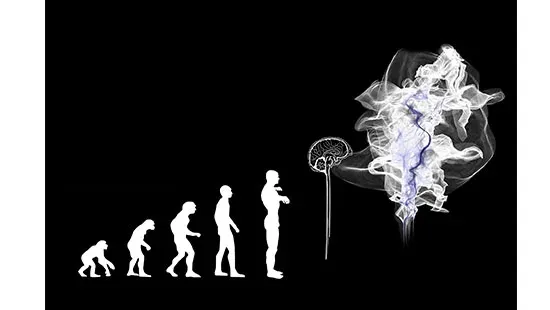
People who consider Dashavatar as only stories must examine closely that Dashavatar has also been interpreted to be reflective of modern Darwinian evolution, as a description of the evolution of consciousness. Because each of the avatars is inter related and resembles Darwin’s theory of evolution. (I feel it really lame of us to believe in Darwin rather than our own scriptures written by OUR ancestors!)
We have been a country of believers so, the way of teaching everything has always differed from the rest of the world. We’ve woven hope, faith and reverence in almost every aspect of life. Whether it’s about treating the other beings regardless of their being animals, birds, insects or any element of Nature or it’s about looking on to other human beings notwithstanding their different personal faiths. Thus, the stories Dashavatar has told us are eternal and will be the primary source of our knowledge, leading us towards our spiritual growth from a tender age.